Tallbit: A Pixel-Perfect Typeface for Modern Creatives
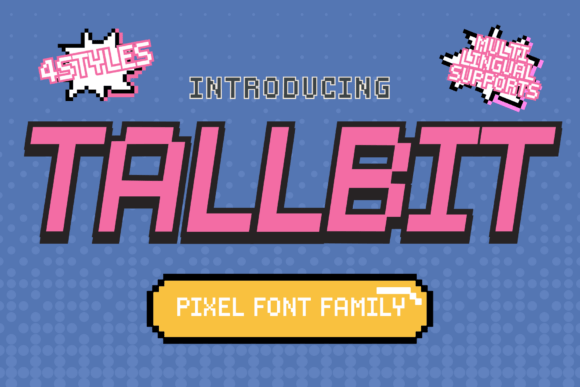
Tallbit stands out as a clean, vertically stretched pixel font crafted for clarity and simplicity. Its tall, narrow letterforms and monospaced structure give it a distinctive retro-digital aesthetic. Unlike many pixel fonts that lean heavily into nostalgia, Tallbit balances its 8-bit roots with a functional design that remains highly legible even at small sizes. This makes it more than just a decorative choice—it’s a practical tool for designers working across a range of digital and print environments.
Where Tallbit Fits Naturally
Whether you're designing a sandbox-style game, crafting in-game UI elements, or developing a retro-themed title, Tallbit brings a cohesive visual language to your project. Its design roots in voxel games and 8-bit interfaces make it especially effective in environments where a pixelated look enhances immersion or nostalgia. But its usefulness doesn’t stop there.
Graphic designers working on editorial layouts, packaging design, or branding materials have also found Tallbit useful for adding a clean, structured visual tone. It works well in creative coding environments, where legibility and uniformity matter, and in social media graphics where a minimalist, modern typography approach is desired.
- Retro video game UI and HUD elements
- Creative coding and terminal-style interfaces
- Editorial design for headlines and captions
- Minimalist brand identities and logo design
- Print and digital packaging for tech-themed products
How Tallbit Impacts Design and Communication
Choosing the right typeface is more than an aesthetic decision—it affects readability, visual hierarchy, and brand perception. Tallbit’s monospaced nature brings structure and consistency to layouts, making it especially useful in environments where alignment and spacing are critical. Its tall, narrow proportions allow for dense text arrangements without sacrificing clarity, which is particularly valuable in constrained UI spaces.
From a branding standpoint, Tallbit introduces a sense of professionalism and intentionality. When used appropriately, it can enhance audience engagement by reinforcing a tech-forward or nostalgic tone. This is especially effective for brands in the gaming, software development, or creative tech sectors where a pixel aesthetic feels authentic and purposeful.
- Improves readability in compact UI spaces
- Supports clear visual hierarchy in editorial layouts
- Strengthens brand identity with a consistent typographic voice
- Encourages recognition through a unique but restrained design
- Engages niche audiences through stylistic authenticity
Choosing Tallbit for Your Project
When evaluating Tallbit for a specific design task, consider the project’s tone, audience, and technical constraints. Because of its pixel foundation, it may not be ideal for long-form body text in traditional publishing contexts. However, for headlines, labels, or interface text—especially in digital formats—it performs exceptionally well.
Test Tallbit in context before committing. Preview it at the intended size and on the target screen or print medium. Pay attention to spacing, contrast, and how it pairs with other fonts in your layout. A common approach is to pair Tallbit with a clean sans serif or a modern serif font to create visual balance while maintaining typographic interest.
Font Pairing Tips
Successful font pairing involves contrast and harmony. Since Tallbit has a structured, pixelated look, pairing it with a more organic or fluid typeface can create a compelling visual dynamic. Consider these combinations:
- Tallbit + Lato – A modern sans serif that complements Tallbit’s geometric structure while softening the overall tone.
- Tallbit + Merriweather – Adds warmth and readability in editorial settings where pixel style meets traditional typography.
- Tallbit + Fira Code – Perfect for developer-focused content, reinforcing a coding or tech-forward identity.
What to Look for in a Commercial Font
If you're using Tallbit in a commercial context—whether for a client project, product packaging, or a digital app—always verify the licensing terms. A premium font like Tallbit often comes with specific usage rights that cover web, print, and embedded applications. Make sure the license allows for the intended use case, especially if you're deploying it in a game or software interface.
Also, check what font styles are included. Some pixel fonts only offer a single weight or limited character set, which can restrict your design flexibility. Tallbit typically includes a range of glyphs and symbols, making it versatile for different applications.
Real-World Applications and Design Notes
In practice, Tallbit has been used effectively in game development for HUDs, level select screens, and in-game item descriptions. Its uniform letter width ensures that text aligns cleanly, which is crucial for UI consistency. In print, it's been applied to limited-run zines, game manuals, and event posters where a digital-retro tone enhances the theme without overwhelming the content.
One design observation is that Tallbit works best when used sparingly. Overuse can lead to visual fatigue, especially in long paragraphs or dense interfaces. Instead, apply it to short bursts of text—titles, labels, or code snippets—where its character can shine without compromising legibility.
For web design, consider using Tallbit as a display font for headings or interactive elements. Pair it with a system font or a web-safe sans serif for body copy to maintain accessibility and performance. On social media, it can add a unique typographic flair to quote graphics, game announcements, or behind-the-scenes development updates.