Bringing Holiday Magic to Typography: Exploring the Unique Appeal of the Merry Tales Font
What Makes Merry Tales Stand Out in the World of Decorative Fonts?
Typography plays a crucial role in setting the tone of any design project, especially during the holiday season. Among the many decorative fonts available, Merry Tales offers a distinctive blend of whimsy, readability, and subtle detail that sets it apart from more generic seasonal typefaces. Designed with a nostalgic nod to classic storybook covers, this serif font brings warmth and charm to a wide range of holiday-themed content.
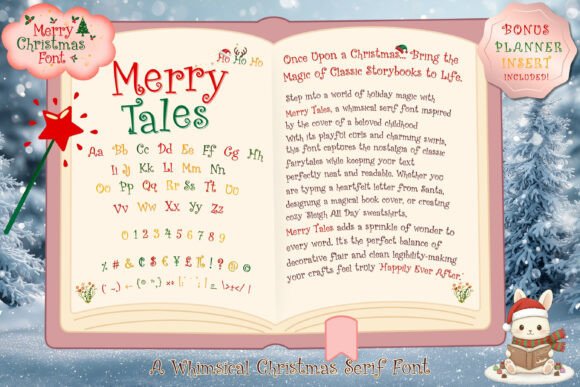
What truly distinguishes Merry Tales is its clever integration of holiday-themed illustrations within the uppercase letters. Upon closer inspection, users will discover tiny elves, snowmen, and Christmas trees subtly incorporated into the letterforms. These “hidden surprises” add a layer of engagement without overwhelming the design or compromising legibility. Unlike many decorative fonts that sacrifice readability for style, Merry Tales maintains clarity even in longer texts, making it versatile for both headlines and body copy.
Comparing Merry Tales to Similar Holiday Fonts
When evaluating seasonal fonts, designers often choose between script, serif, and display styles, each with its own strengths and limitations. Script fonts, for example, offer elegant flourishes that work well for invitations and greeting cards but can become difficult to read in extended passages. Display fonts tend to be highly stylized, making them ideal for headlines but less practical for body text.
In contrast, Merry Tales strikes a balance between ornamentation and usability. Its serif structure provides a traditional, storybook feel while maintaining consistent spacing and character recognition. This makes it more adaptable than many holiday-themed alternatives that lean too heavily into visual flair at the expense of functionality. For projects that require both charm and clarity—such as holiday newsletters, children’s activity sheets, or digital planners—Merry Tales offers a practical yet festive option.
Strengths and Tradeoffs: When Does Merry Tales Shine?
One of the primary strengths of Merry Tales lies in its dual functionality. It’s not just a decorative font with holiday flair; it’s designed to be legible and usable across a variety of formats. This makes it particularly well-suited for:
- Christmas greeting cards and Santa letters
- Holiday-themed digital planners and journaling apps like GoodNotes
- Storybook covers and children’s holiday printables
- Merchandise design, such as mugs, t-shirts, and ornaments
Its built-in illustrations eliminate the need for additional clipart or icons, streamlining the design process. For example, a simple headline like “Merry Christmas” subtly includes festive elements within the letters themselves, reducing the need for external decorations. This feature can be especially useful for digital designers who want to maintain a cohesive visual theme without cluttering their layouts.
However, like any design tool, Merry Tales has its limitations. While its hidden details are charming, they may not be noticeable in smaller sizes or lower-resolution outputs. Additionally, its storybook aesthetic may not align with modern or minimalist design directions. In such cases, a cleaner sans-serif or a more subdued serif font might be a better fit.
Best-Fit Situations: Who Benefits Most from Using Merry Tales?
Merry Tales is ideal for creators who want to infuse their holiday projects with a sense of nostalgia and whimsy without sacrificing legibility. It’s particularly effective for:
- Content aimed at children or families
- Projects that require a warm, traditional feel
- Designers who want to reduce reliance on external graphics
- Print and digital formats that blend storytelling with design
For instance, educators creating holiday activity sheets or bloggers designing festive printables will find that Merry Tales enhances the visual appeal of their materials while remaining easy to read. Similarly, small business owners crafting holiday marketing materials can benefit from the font’s ability to convey both professionalism and charm.
Alternatives and Considerations: When to Look Elsewhere
While Merry Tales offers a unique combination of features, it’s not the only option available. Designers who prefer a more contemporary aesthetic might lean toward modern script fonts or minimalist sans-serif options that offer seasonal variations. Some alternatives provide similar illustrative elements but may not maintain the same level of readability in body text.
Additionally, for projects that require multilingual support or advanced typographic features (such as ligatures or alternate glyphs), users should verify whether Merry Tales meets those needs. Some decorative fonts are limited in character sets or language support, which can be a constraint for international use or complex design projects.
Practical Examples: How to Use Merry Tales Effectively
To get the most out of Merry Tales, consider pairing it with complementary fonts that balance its ornate style. For example:
- Use Merry Tales for headlines and headers, and pair it with a clean sans-serif for body text.
- Incorporate it into holiday cards where the hidden illustrations add a personal touch without requiring extra design elements.
- Apply it to digital planners or GoodNotes templates where a warm, storybook tone enhances the user experience.
Designers working on print-on-demand items like t-shirts or mugs can leverage the font’s built-in holiday charm to create cohesive, eye-catching designs. A simple phrase like “Sleigh All Day” gains visual interest through the subtle illustrations embedded in each letter, allowing the text itself to serve as both message and decoration.
Making an Informed Decision: Is Merry Tales Right for You?
Ultimately, the choice of a holiday font depends on the project’s tone, audience, and intended use. Merry Tales is a strong contender for those seeking a decorative yet readable font that brings a touch of whimsy and surprise to their designs. Its unique blend of storybook charm and practical usability makes it a versatile option for a wide range of applications.
However, if your design requires a more modern or minimalist approach, or if you need extensive typographic customization, you may want to explore other seasonal fonts or font families that better align with those needs. As with any design decision, the key is to match the font’s characteristics with the project’s overall goals and audience expectations.