Majapahit Heritage: A Typeface Rooted in Java’s Golden Age
The Majapahit Empire, once the most powerful kingdom in the Indonesian archipelago, left behind a legacy of art, architecture, and cultural sophistication. Today, that legacy finds new life through Majapahit Heritage, a typeface that seamlessly merges historical elegance with modern design functionality. This font is not merely a collection of letters—it is a narrative of tradition, resilience, and aesthetic depth that resonates across time and medium.
Origins and Aesthetic Foundations
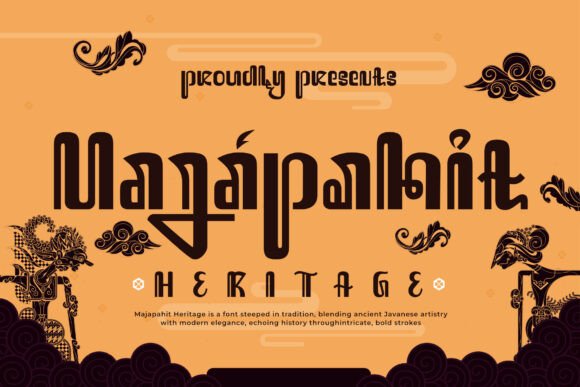
At its core, Majapahit Heritage draws inspiration from the visual language of Java’s golden age. The font mimics the stylized inscriptions found on temple walls, ancient manuscripts, and royal decrees. Its design echoes the curves and flourishes of traditional Javanese calligraphy, while the bold, deliberate strokes reflect the strength and permanence of the empire’s artistic identity.
Each character is crafted with meticulous attention to historical detail. The serifs and ligatures are not arbitrary embellishments but carefully studied interpretations of ancient scripts. This faux Javanese aesthetic allows the font to evoke a sense of nostalgia without becoming an impractical replica of the past.
Design Characteristics That Stand Out
- Intricate Curves: The flowing lines mirror the elegance of traditional Javanese writing, offering a visual rhythm that is both graceful and legible.
- Bold Strokes: These convey the strength and authority associated with royal decrees and monumental architecture of the Majapahit era.
- Refined Details: From subtle serifs to balanced spacing, each element is designed to enhance readability while preserving historical authenticity.
The font’s versatility lies in its ability to maintain a strong cultural identity while adapting to contemporary design needs. Whether used in print or digital media, Majapahit Heritage retains its visual impact without sacrificing clarity or usability.
Practical Applications Across Industries
One of the defining strengths of Majapahit Heritage is its wide range of applications. It serves as more than a decorative typeface—it is a tool for storytelling, branding, and cultural expression. Here are some of the fields where it excels:
- Branding and Identity Design: Businesses that want to incorporate a sense of heritage or regional authenticity can use the font to create logos, packaging, and marketing materials that stand out.
- Poster and Artistic Design: Its ornate yet readable structure makes it ideal for posters, invitations, and visual art projects that require a touch of historical elegance.
- Educational and Cultural Projects: Educators and researchers can use the font to create visually engaging materials about Indonesian history, art, or literature.
- Editorial and Publishing: For books, magazines, or academic papers that explore Javanese culture, the font enhances the thematic coherence of the content.
Its adaptability extends beyond traditional uses. In digital platforms, Majapahit Heritage can be employed in web headers, mobile app interfaces, or social media graphics that aim to evoke a sense of cultural depth and authenticity.
Why Choose Majapahit Heritage?
Typography plays a crucial role in shaping perception and emotional connection. Majapahit Heritage offers several advantages that make it a compelling choice for designers and creators alike:
- Cultural Resonance: It connects users to the artistic and historical richness of Java, making it ideal for projects with cultural or educational themes.
- Visual Distinctiveness: Unlike generic decorative fonts, this typeface has a unique character that adds depth and meaning to any design.
- Modern Legibility: Despite its historical roots, the font is designed for optimal readability, ensuring it works well in both print and digital formats.
- Emotional Impact: Its aesthetic evokes a sense of nostalgia and reverence, making it effective for storytelling and branding strategies that rely on emotional engagement.
Considerations for Effective Use
While Majapahit Heritage is a powerful design asset, its effectiveness depends on thoughtful application. Here are some practical tips for using the font effectively:
- Pair with Complementary Fonts: To avoid overwhelming the reader, use Majapahit Heritage as a headline or accent font and pair it with a clean sans-serif or serif typeface for body text.
- Use in Contextual Design: The font works best in designs that have a cultural or historical theme. It may not be suitable for highly technical or minimalist projects unless used sparingly.
- Test for Readability: Always test the font at different sizes and on various backgrounds to ensure it remains legible across devices and platforms.
- Respect Its Origins: While the font is a modern creation, it pays homage to a rich cultural history. Designers should approach its use with awareness and sensitivity to its symbolic meaning.
Preserving Tradition in the Digital Age
In an era where digital design often prioritizes minimalism and speed, Majapahit Heritage offers a refreshing contrast. It reminds us that typography can be more than functional—it can be a vessel for cultural memory. By integrating historical motifs into modern design practices, this font ensures that the legacy of the Majapahit Empire continues to inspire new generations of creators.
Whether used in a museum exhibit, a wedding invitation, or a brand campaign, Majapahit Heritage transforms text into a symbol of identity and heritage. It bridges the gap between past and present, allowing users to honor tradition while embracing innovation.
Conclusion
In the world of typography, few fonts carry the depth and symbolism of Majapahit Heritage. It is more than a design element—it is a tribute to the artistry, wisdom, and enduring influence of Java’s golden age. As designers, educators, and storytellers continue to seek meaningful ways to connect with audiences, this font stands as a testament to the power of visual language in preserving and celebrating cultural identity.