Choosing the Right Typeface for Branding: Why Gesecs Stands Out
When it comes to crafting a memorable brand identity, typography plays a critical role. The choice of typeface can influence perception, evoke emotion, and reinforce messaging. Among the many options available, Gesecs emerges as a distinctive choice for designers working on logos, branding materials, headers, and titling applications. Unlike general-purpose fonts designed for body text, Gesecs is built for visual impact, offering a tailored aesthetic that supports high-visibility design contexts.
What Makes Gesecs Unique
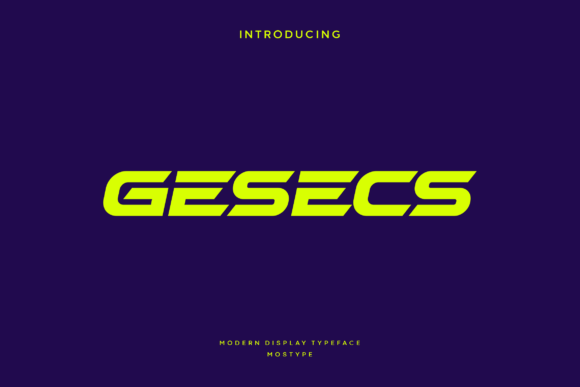
Gesecs is not a one-size-fits-all font. It's specifically engineered for scenarios where typography needs to command attention. The font’s design emphasizes clarity and boldness at larger sizes, making it ideal for logo creation and headline use. Its spacing is meticulously adjusted to enhance legibility and visual balance in short-form, high-impact settings. This precision ensures that when a designer uses Gesecs, the result feels intentional and refined.
One of the defining characteristics of Gesecs is its intentional avoidance of subtlety. It doesn't aim to blend into the background like many body fonts do. Instead, it asserts presence—perfect for when a brand needs to make a strong visual statement. However, this strength also defines its limitations. Gesecs is not intended for extended reading or paragraph-based content, where line spacing, character width, and kerning are optimized for endurance rather than impact.
How Gesecs Fits Into the Typeface Landscape
In the broader world of typography, typefaces fall into categories based on function and aesthetic. Serif fonts often convey tradition and formality, while sans-serif options tend to feel modern and clean. Display fonts, like Gesecs, sit in a specialized niche—they're designed to be seen, not read extensively.
Compared to other display fonts, Gesecs stands out for its balanced proportions and deliberate spacing. Many display fonts sacrifice readability for style, leaning heavily into decorative elements that can become distracting. Gesecs avoids this pitfall by maintaining a strong typographic structure while still offering a distinctive character. This balance makes it more versatile than highly stylized alternatives, especially when consistency across branding materials is essential.
Comparing Gesecs to Similar Options
Designers evaluating typefaces for branding often consider several factors: legibility at different sizes, adaptability across mediums, and how well the font aligns with the brand’s personality. When compared to other display fonts intended for logo and titling use, Gesecs offers a middle ground between minimalism and expressiveness.
- High-contrast serif display fonts may offer elegance but can lose clarity at smaller sizes or in digital formats.
- Geometric sans-serif options provide a modern, structured look but sometimes lack the individuality needed for standout branding.
- Hand-drawn or script display fonts offer personality but often sacrifice readability and professionalism.
Gesecs navigates these tradeoffs effectively. It retains clarity and structure while still offering a unique visual identity that can differentiate a brand without overwhelming its message.
Strengths and Limitations of Gesecs
Understanding when to use Gesecs requires a clear grasp of its strengths and where it falls short. Its primary advantage lies in its ability to deliver visual impact without sacrificing typographic integrity. This makes it an excellent choice for:
- Logo design where a strong typographic presence is desired
- Brand headers and subheaders across marketing materials
- Event titling and promotional graphics that need to stand out
However, Gesecs is not a universal solution. Due to its optimized spacing and design for large-scale use, it does not scale well into body text applications. Attempting to use it in long-form content could lead to awkward spacing, uneven rhythm, and reduced readability. In such cases, pairing Gesecs with a complementary body font often yields the best results—using Gesecs for headings and a more legible font for supporting text.
When Gesecs Is the Right Choice
Brands looking to project confidence, clarity, and a modern edge will find Gesecs to be a strong fit. It works particularly well in industries where visual identity plays a central role—such as fashion, tech startups, entertainment, and lifestyle branding. Because of its balanced design, it also adapts well across digital and print media, ensuring consistency in multi-channel campaigns.
For example, a tech brand launching a new product might use Gesecs for its campaign headlines and logo treatment, paired with a clean sans-serif for supporting copy. This combination leverages Gesecs for its visual strength while relying on a more readable font for detailed explanations.
When to Consider Alternatives
There are scenarios where Gesecs may not be the best fit. Brands aiming for a softer, more approachable tone might find it too rigid or bold. Similarly, if a project requires a single font to handle both headlines and body text, Gesecs would not be the ideal choice due to its structural limitations in smaller sizes.
In such cases, designers may lean toward more versatile sans-serif fonts that maintain readability across a wide range of applications. Alternatively, if a highly stylized or thematic look is needed—such as vintage, handwritten, or graffiti-inspired aesthetics—other display fonts might better suit the visual direction, even if they come with tradeoffs in legibility.
Practical Considerations for Using Gesecs
Before integrating Gesecs into a design project, it's important to test how it performs in real-world applications. Designers should evaluate its appearance across different mediums—print, web, mobile—and at various sizes to ensure it maintains its intended impact. Kerning adjustments may be necessary depending on the specific application, especially in logo design where letter spacing plays a crucial role in overall balance.
Licensing is another important factor. As with any professional typeface, users should verify that Gesecs is appropriately licensed for their intended use, particularly in commercial branding applications where widespread deployment is expected.
Making an Informed Decision
Selecting a typeface is more than a design choice—it's a strategic decision that affects how a brand is perceived. Gesecs offers a compelling option for designers who need a strong, visually engaging typeface tailored for logos, headers, and titling. Its precise spacing and intentional design make it stand out in branding contexts where clarity and presence matter most.
However, like any design tool, it has its boundaries. Understanding these limitations ensures that designers use Gesecs effectively and avoid misapplication in contexts where it may not perform as well. By weighing its strengths against project requirements and considering how it compares to other available options, designers can make a more informed choice that aligns with both aesthetic and functional goals.