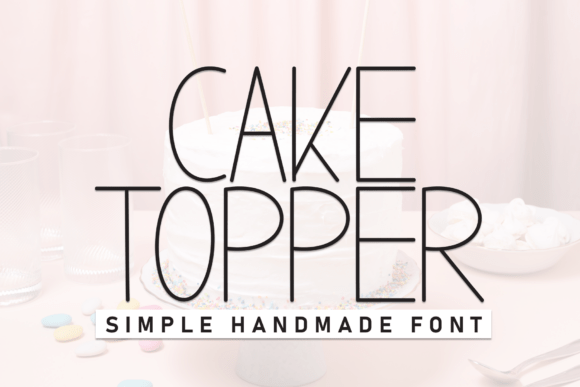
Cake Topper: A Handwritten Font That Radiates Warmth and Energy
Cake Topper isn’t just another pretty typeface. It’s a carefully crafted handwritten display font that blends a sense of warmth with a lively rhythm. At first glance, its letterforms feel personal and inviting, like a handwritten note from someone you care about. But beneath that approachable surface lies a dynamic structure that gives it presence and personality—perfect for projects that need to feel both genuine and visually engaging.
The font’s rounded edges and fluid strokes suggest a playful yet elegant tone. It doesn’t scream for attention, but it definitely makes you want to linger. This balance makes Cake Topper especially effective in designs that need to feel human and heartfelt without sacrificing visual appeal. Whether it’s part of a wedding invitation suite or a greeting card collection, this font adds a layer of emotional resonance that’s hard to replicate with more rigid typefaces.
Where Cake Topper Shines Best
One of the standout features of Cake Topper is its versatility across design contexts. It’s not limited to a single niche or industry. Instead, it adapts beautifully to a wide range of creative and commercial applications. Wedding designers, in particular, have found it to be a go-to for invitation suites, thank-you cards, and even signage. Its soft curves and flowing style evoke a sense of celebration and intimacy, which aligns perfectly with the tone of most wedding-related materials.
But Cake Topper also performs well beyond the world of weddings. It works beautifully in greeting cards, packaging design, and editorial layouts where a warm, approachable tone is needed. For digital creators, it’s a strong choice for social media graphics, especially when the goal is to convey personality or build a sense of connection with the audience. Small business owners and independent brands have also used it effectively in logo design and product labeling, particularly in lifestyle, wellness, and artisan markets.
How Cake Topper Influences Design and Perception
Typography plays a subtle but powerful role in shaping how audiences perceive a brand or message. Cake Topper’s personality—friendly, expressive, and slightly whimsical—can significantly influence how a design is received. When used thoughtfully, it can make a brand feel more personable and less corporate. This is especially valuable in today’s market, where consumers often seek authenticity and emotional connection.
In terms of readability, Cake Topper is best suited for short bursts of text such as headlines, subheadings, and callouts. Its stylized nature means it’s not ideal for long paragraphs or body copy. However, when used appropriately, it enhances visual hierarchy by drawing the eye and setting the tone for the rest of the content. In branding applications, this can help establish a cohesive identity that feels both modern and emotionally engaging.
From a design consistency standpoint, Cake Topper holds up well across different mediums—whether it’s printed on stationery or displayed on a mobile screen. The font maintains its charm without losing clarity, which is essential for maintaining professionalism in design work. And because it’s a premium font, users can expect a level of polish and completeness that often comes with commercial design assets.
Practical Tips for Using Cake Topper in Your Projects
Choosing a font like Cake Topper requires more than just aesthetic appeal—it needs to align with the project’s goals, audience, and overall design direction. Start by asking yourself: does the tone of this font match the message you’re trying to convey? If you're designing a playful birthday card or a boutique brand identity, the answer is likely yes. But for more formal or technical applications, it may not be the best fit.
When evaluating font pairings, look for complementary styles that provide contrast without clashing. A clean sans serif like Helvetica or a warm serif like Georgia can serve as a great counterpoint to Cake Topper’s flowing script. The goal is to create a visual balance that allows both fonts to shine in their respective roles—Cake Topper as the expressive headline and the secondary font as the reliable body text.
Before finalizing your design, always test the font in context. Print out a sample if it’s going to press, or preview it on multiple devices if it’s digital. This helps you see how the font behaves in real-world conditions and ensures that its charm doesn’t come at the cost of legibility or usability.
What to Look for When Licensing Cake Topper
As with any commercial font, licensing is a crucial consideration. Most premium fonts, including Cake Topper, come with clear usage guidelines that outline whether it can be used for personal, editorial, or commercial purposes. If you're using the font for a client project or a product that will be sold (like printed cards or digital templates), make sure the license covers those applications.
Also, check what styles and weights are included in the package. Some display fonts only come in one weight, which can limit your flexibility. Fortunately, Cake Topper typically includes a range of variations, allowing for more nuanced design applications. This is especially useful when building a brand identity or a multi-layered editorial layout where visual hierarchy matters.
Real-World Examples and Design Observations
Let’s say you’re working on a line of artisanal cookie packaging. Using Cake Topper for the product name gives it a homemade, handcrafted feel—even if it's mass-produced. Paired with a simple sans serif for the ingredients list and nutritional info, you create a design that feels both charming and professional.
Another example: a local bakery launching a new seasonal menu. Social media graphics featuring Cake Topper in the headlines immediately convey warmth and friendliness. When used consistently across digital and print materials, the font becomes part of the brand’s visual language—helping build recognition and emotional connection.
Designers working on editorial projects like greeting cards or small-run zines have also reported success using Cake Topper for titles and pull quotes. It adds visual interest without overpowering the layout, and its expressive nature complements more neutral body fonts without competing with them.
In short, Cake Topper works best when used intentionally. It’s not a font that should be overused or forced into every project. But when the tone and purpose align, it can elevate a design from functional to memorable.